We hire when we meet the right person, not when we post a role.
OneTap Labs is a hardware lab. Project R is our first line — presence-verification systems for physical spaces. If you build hardware, firmware, sensor-fusion ML, or run hardware-into-the-field operations, introduce yourself. We'll know.
ApplyWhat we're building
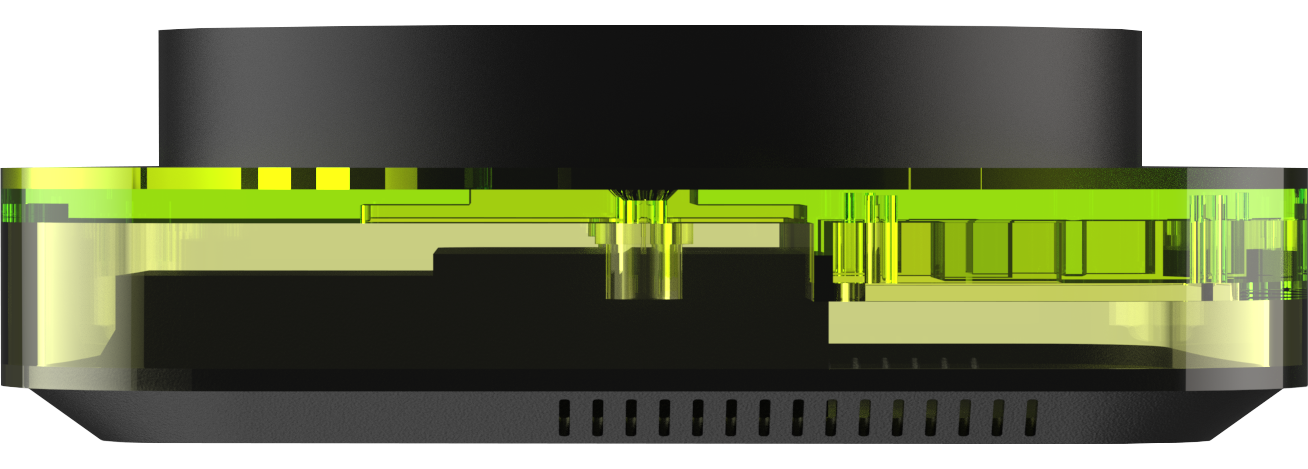
Project R is OneTap Labs' first line — hardware, firmware, ML, and a dashboard that turns physical presence into auditable data. R1 ships today. R2 and the standalone dashboard ship next. The lab outlives the project: when Project R is mature, the next one starts.
Our values are downstream of our doctrine. They are the rules we use to make decisions when something is negotiable, and the lines we don't cross when something isn't. We treat them as load-bearing, not aspirational.
- Make the physical world run itself. Working at Onetap Labs means being part of a team that believes the physical world deserves the same compounding progress software has had for two decades. Stores still have cashiers. Schools still mark attendance by hand. Factories still pay people to watch things that could verify themselves. We build the hardware that closes that gap — verified presence today, autonomous physical systems next, and every breakthrough between here and a world where humans don't spend their attention on things machines should handle.
- People are the platform. Customers are downstream of products. Products are downstream of people. Most companies build brand and marketing to attract customers; we build brand and marketing to attract the team that builds the products that earn the customers. This is the operating order, and it doesn't reverse under pressure. Hiring is the slowest process at the company, by design. Empty seats are cheap. Wrong seats are catastrophic.
- One owner, end to end. Every domain has a single owner. Decisions are not diffused into committees, and accountability is not laundered through process. The person who designed it is the person who reflows it, ships it, and answers for it. Public credit follows: what you build, you ship, and the company says you built it. Internal work doesn't disappear into “the team did X.”
- Generational, or not at all. We build products that move their category forward by a generation, or we don't take the project on. The long-arc roadmap is the actual reason the company exists — it shapes hiring, product, and investor decisions. We turn down customers, contracts, and capital that would compromise it. A strategy adjusts to circumstances; this doesn't.
- Hard problems on purpose. We don't manufacture difficulty — the problems are inherently hard, and we pick them on purpose. If we wanted easy work, we'd be building something else. The compounding payoff is that the team we attract is the team that wants problems like these.
- No theater. No HR layer. No status meetings about status meetings. No performance ritual designed to manage out the worst ten percent. No politics, because the team doesn't allow it. The thing in the field is the spec; everything else is decoration. We document because we respect our future selves and our teammates, not because process requires it. We measure shipped work, not visible activity.
Operating Principles
Our values say what we stand for. Our operating principles say what we do. They are the decision rules we apply when something is on the table — in meetings, in hiring loops, in pull requests, in everyday execution. The values describe the company at scale. The principles describe the company at the desk.
- One person owns it. Every project, every decision, every domain has one accountable owner. Not a committee. Not a backup. Not “the team.” If you can't name the owner of a thing, you don't have an owner — and you don't have a thing.
- Speed by default. Slow down when you don't know. Default to shipping. Default to deciding. The exception is fog — about the user, the architecture, or the second-order effects. Then we slow down enough to find ground, and we don't accelerate before we've found it.
- Memes are documentation, if they're correct. A well-aimed meme in #general can communicate a lesson faster than a wiki page. Just make sure it's actually right. Wrong memes get screenshot and used against you forever.